


Planned & Preventative Maintenance
Regular pool maintenance is essential in having a clean and safe environment to swim or relax in. A bespoke plan can be tailored to your needs, whether monthly or bi-annually [during Apr and Sep].
The investment in regular and routine maintenance, is invaluable for ensuring that the system [as a whole] will be given the best chance of longevity – whether in constant or seasonal use. In addition, customers can be provided with comfort that the risk of an unexpected and costly breakdown will be reduced.
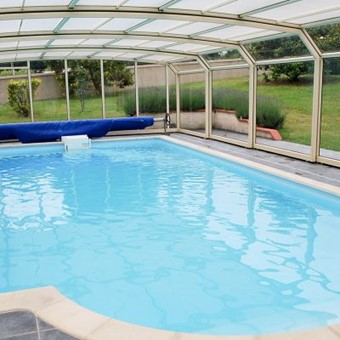 Careful consideration into the monitoring of pool chemicals and water quality [pH level] are required, as any imbalances or build-up of bacteria have the potential to be harmful for not only your health, but the system integrity itself – by way of equipment corrosion.
Pool covers have many benefits – not only aiding the reduction of heat loss – keeping your system energy efficient, but also in protecting the water from a variant of weather/external contamination. Many of the components on a pool system also have the ability to capture debris and filter impurities, however these may still need to be manually emptied to discourage any potential blockages.
How is the pH level monitored?
We currently refer to The Langelier Saturation Index [LSI] when measuring water quality. For further context, the index gives guidance on whether the water is unbalanced at a level that will likely cause either corrosion of or a build-up of scale in the system, by predicting the stability of calcium carbonate in it.
Testing regularly is therefore important to assist with the lifespan of pipework, components and other equipment, along with also considering the health of those using the pool and meeting regulatory requirements. While enlisting a professional to complete this is often desirable, homeowners can do some testing themselves by using pH test strips and comparing the results on the corresponding colour chart.
How Is the Langelier Saturation Index Calculated?
Calculating the LSI requires precise measurements of certain parameters. Each of these influence the final single LSI value.
The result of this calculation indicates whether the water is under-saturated, saturated, or over-saturated with calcium carbonate.
The parameters include:
- pH: The acidity or alkalinity of water.
- Temperature: Typically measured in Celsius.
- Calcium Hardness: Calcium content in the water.
- Total Alkalinity: Water’s ability to neutralize acids.
- Total Dissolved Solids (TDS): Concentration of dissolved substances.
Though the LSI method is used for some water chemistry, it does not fully account for variable conditions such as changing water pressure or microbial presence which may be tested via other means.